


Why hydrogen is essential in waste-to-SAF production

Sustainable aviation fuel (SAF) is widely recognised as a drop-in solution to aviation’s carbon emissions problem, but the chemistry behind it is anything but simple. For producers converting municipal solid waste into jet fuel using gasification and Fischer-Tropsch synthesis, chemical balance is essential.
Unlike power-to-liquid pathways, where carbon dioxide and water are the sources of carbon and hydrogen, respectively, traditional waste-based SAF derives these atoms from the breakdown of waste materials to form syngas, a mixture of carbon monoxide and hydrogen. However, syngas derived from household waste does not usually contain the appropriate ratios of gases for optimal Fischer-Tropsch (FT) conversion. To maximise yields and fuel quality, the gas composition must be strategically adjusted.
Balancing gas ratios for optimal fuel yield
The hydrogen to carbon monoxide ratio in the syngas stream is a delicate balance that directly impacts fuel yield and quality. The FT process performs optimally when a ratio of around 2 to 1 H2 to CO is used. Syngas produced from gasification of residual household waste often falls short of this, as waste-derived feedstocks tend to contain more carbon than hydrogen.
To balance this ratio, excess hydrogen can be introduced into the mix, enabling greater conversion of syngas into FT synthetic crude. Without enough hydrogen, much of the carbon in the gas stream goes unused or converted into harmful by-products like CO2. With the right ratio, however, you can maximise hydrocarbon formation, boost overall fuel yield, and improve the economics of the process.
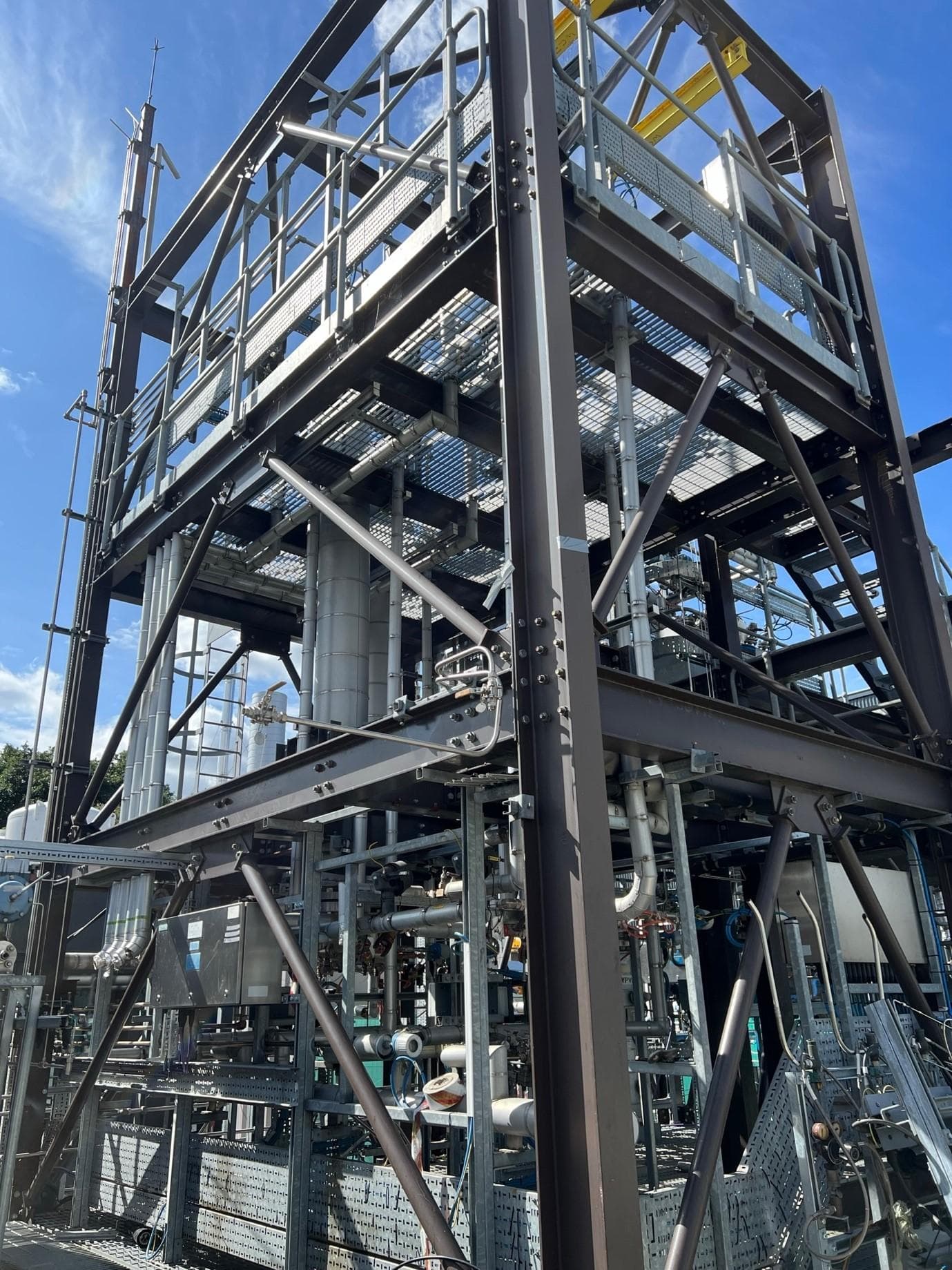
Bridging power-to-liquid and waste-to-fuel for efficient manufacturing
Avioxx’s novel SAF production process draws from established routes to create a hybrid approach by integrating green hydrogen production into a gasification-FT pathway, combining aspects of traditional power-to-liquid (PtL) and waste-derived SAF routes. In the Avioxx Process, solid oxide fuel cells are introduced to generate electricity from syngas which, in turn, powers the electrolysis of water to produce hydrogen.
This approach leverages the high carbon content of waste and augments it with clean hydrogen to fine-tune the FT process without extensive external electricity requirements. The hybrid pathway offers flexibility, scalability, and the potential for improved carbon efficiency, maximising resource use and minimising emissions.
Enabling dynamic syngas control
Applying high-efficiency hydrogen production to fuel manufacturing turns a feedstock challenge into a process advantage: the ability to adjust the syngas composition in real time. Syngas composition can vary due to the heterogeneous nature of waste feedstocks, and on-site hydrogen production allows for real-time response, fine-tuning gas mixtures to maintain optimal reactor conditions and increase conversion. This operational flexibility leads to higher fuel yield and more consistent product quality.
In contrast, PtL routes rely solely on hydrogen from large-scale electrolysis powered by external renewable electricity, often tied to grid availability or long-term power purchase agreements. By producing electricity as part of the SAF process itself with technologies such as solid oxide fuel cells, dependence on external sources is reduced, thus ensuring hydrogen can be readily available when it is needed.
Hydrogen as a strategic lever in SAF systems
Hydrogen is a critical enabler in advanced waste-to-fuel pathways, bridging the gap between carbon-rich waste streams and clean alternative fuel outputs. By integrating high-efficiency hydrogen production directly into the process, it becomes possible to dynamically optimise syngas composition, improve Fischer-Tropsch conversion, and enhance overall fuel yields.
This hybrid model drawing from both gasification and power-to-liquid technologies represents a strategic evolution in sustainable fuel production. It offers greater flexibility to manage feedstock variability and enables new efficiencies in carbon utilisation. These advances point to a more resilient, scalable, and resource-efficient approach to SAF manufacturing, aligning with long-term decarbonisation goals to achieve net-zero aviation.
For more information about the Avioxx Process, please contact us at info@avioxx.com.
Cover image by pikisuperstar on Freepik