


Unlocking Cost Parity in the Aviation Fuel Market
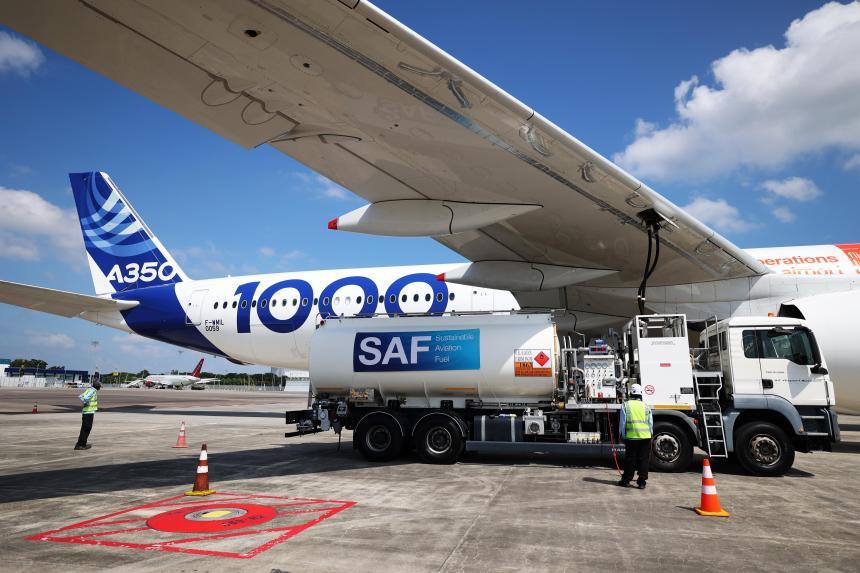
The sustainable aviation fuel (SAF) market is gaining momentum as policies mature and evolve. With the 2% SAF mandate taking effect this year, the sector is seeing an influx of innovators, skilled engineers and long-term financial commitments.
A recent industry analysis presented at the SAF Congress offers fresh insight into the opportunities and challenges of scaling SAF production from demonstration to full commercial deployment.
The FOAK challenge
First-of-a-kind (FOAK) projects demand a unique blend of skills, partnerships and capital structures. They carry high costs and elevated risks, making them less attractive to conventional project finance.
The analysis identifies five main funding sources for FOAK development:
- Super rounds from venture investors – fast and familiar, but highly dilutive.
- Philanthropic or catalytic capital – mission-driven and flexible, though limited in scale.
- Strategic investors – aligned with corporate roadmaps and capable of long-term commitments.
- Government funding – motivated by public benefit and often creating a “halo effect” that draws further investment.
- Project equity and debt – smaller-scale financing that imposes discipline and enhances bankability.
A sixth pathway is emerging through targeted tax credits, such as the U.S. Qualifying Advanced Energy Project Credit (48C), which covered nearly half the cost of a $300 million FOAK nuclear fuel facility.
The goal is to convert FOAK projects into profitable, bankable next-of-a-kind (NOAK) plants through blended capital structures, strong governance and standardised designs that allow scalable SAF production.
The global SAF picture
A recent market research study tracked 254 operational and in-development SAF projects worldwide, representing 62.9 billion litres of announced annual capacity. As of July 2025, 43 operational projects are producing 9.17 billion litres annually, with commercial-scale plants dominating the pipeline.
HEFA (hydro processed esters and fatty acids) remains the most widely deployed technology, thanks to its maturity, yield efficiency and feedstock availability.
Regional highlights
- United States – A global leader in SAF development, driven by the 45Z tax credit and the Low Carbon Fuel Standard (LCFS).
- Europe – The RefuelEU Aviation policy, mandating higher SAF blend ratios and e-SAF targets, has spurred a wave of announcements. Europe now accounts for two-thirds of planned e-SAF capacity despite holding just one-fifth of global total capacity.
- United Kingdom – Taking a diversified path, with 20 projects exploring 11 different technologies. The UK SAF Mandate and proposed Contracts for Difference (CfD) are sending strong early-stage signals to investors.
Barriers to Progress
Securing long-term offtake agreements remains a challenge. SAF producers need contracts to unlock financing, but airlines are reluctant to commit to fixed-price deals in today’s volatile aviation fuel market.
Infrastructure for transporting and blending SAF at airports is still limited, while feedstock supply remains uncertain. Premium SAF pricing adds another layer of difficulty, creating a financial blockage.
Solutions are emerging: SAF surcharges on tickets, three-way agreements involving financial backers, and book-and-claim systems where airlines buy SAF certificates even if the fuel is consumed elsewhere. These mechanisms should enable a steady increase in SAF manufacturing.
What’s next
First-of-a-kind (FOAK) projects are essential in proving new technology at scale. At Avioxx, we are not only demonstrating this capability but also showing how these can evolve into next-of-a-kind (NOAK) plants. Our ambition is to develop ten facilities across the UK, supported by a global licensing model.
Sustainable Aviation Fuel (SAF) is edging closer to bankability, driven by stronger project pipelines and expanding policy support. Yet the critical question remains: how quickly can FOAK projects transition into replicable, commercial-scale plants?
At Avioxx, we are answering this challenge. With the commissioning of our X25FT reactor this month and the integration of new Aveva technology, we are proving that FOAK plants can deliver clean, scalable, and commercially viable SAF.
Once built to scale, Avioxx fuel will achieve cost parity with fossil kerosene while burning ultra-clean, supporting the aviation industry’s journey to Net Zero.
If you’d like to learn more, please contact us at info@avioxx.com.